


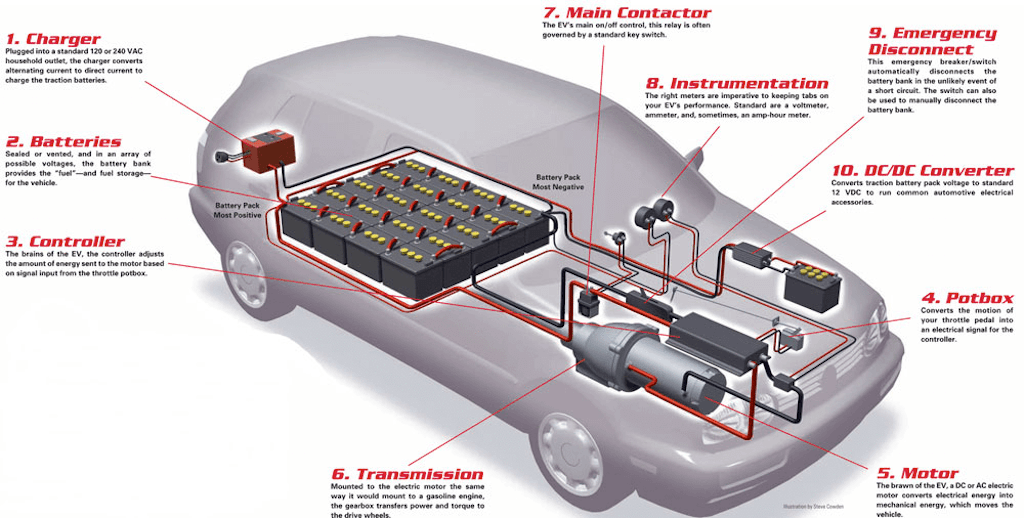
When buying a used electric vehicle (EV), battery health is the most important factor to consider. EV batteries, usually lithium-ion, degrade over time due to mileage, age, charging habits, and climate. Most manufacturers offer warranties of 8 years or 100,000 miles, but actual battery condition can vary.
Factors Affecting Battery Life:
- Mileage & Age: Higher mileage can reduce capacity, but age also matters.
- Charging Habits: Frequent fast charging may wear the battery faster than slow home charging.
- Climate: Extreme heat or cold can affect battery efficiency.
- Battery Management System (BMS): Properly functioning BMS helps preserve battery health.
How to Evaluate a Used EV Battery:
- Check the state-of-health (SoH) report.
- Review charging history.
- Ensure warranty coverage, if available.
Signs of a weak battery include reduced driving range, slower charging, and warning lights. With careful evaluation, a used EV can still provide reliable, eco-friendly performance.
Understanding EV Battery Life
EV batteries, typically lithium-ion, degrade over time. Battery health is affected by factors such as charging habits, climate, mileage, and usage patterns. Most EV manufacturers provide warranties of 8 years or around 100,000 miles on the battery, reflecting the expected durability. However, actual performance can vary depending on how the car was treated.
Key Factors Affecting Battery Performance
- Mileage and Age
Higher mileage generally correlates with more battery degradation, but age also plays a role. A lightly driven car that is 10 years old may have a battery in worse shape than a 5-year-old vehicle driven frequently but carefully. - Charging Habits
Frequent use of fast chargers can accelerate battery wear due to higher heat generation, while consistent use of slow home charging tends to preserve battery health. - Climate and Storage
Extreme temperatures, both hot and cold, can reduce battery efficiency over time. EVs stored in temperate climates usually maintain better battery capacity. - Battery Management Systems (BMS)
Modern EVs have advanced BMS to optimize charging and prevent over-discharge, helping maintain battery life. Checking whether the system has logged any issues is important.
Evaluating a Used EV Battery
Before buying, it’s crucial to assess the battery’s current health. Here’s how:
- Check Battery Health Reports: Some EVs allow you to access the state-of-health (SoH) via onboard diagnostics or dealer reports. A healthy battery typically retains 80–90% of its original capacity after 5–6 years.
- Review Charging History: Frequent fast charging or deep discharges may indicate accelerated wear.
- Look for Warranty Coverage: Some manufacturers offer transferable warranties, which can provide peace of mind.
Signs of a Weak Battery
- Reduced driving range compared to the original specifications.
- Slower charging speeds or frequent charging errors.
- Warning lights or error codes related to the battery system.
Conclusion
A used EV can still offer many years of reliable service, but the battery’s condition is paramount. Buyers should carefully evaluate battery health reports, consider the car’s age and usage, and, if possible, have a professional inspection. With the right precautions, a used EV can be a smart, eco-friendly, and cost-effective choice.